
INDIA bloc parties are set to raise issues such as the Pahalgam attack, US President Trump's claims of brokering a ceasefire, and concerns over electoral roll revisions in Bihar during the Parliament's Monsoon session.
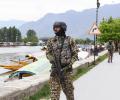
'It was inspired by the Hamas attack and was like their attack -- well planned and well executed.'

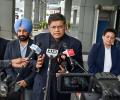
An Indian delegation led by the BJP's Ravi Shankar Prasad will tour key European capitals to expose Pakistan's role in cross-border terrorism and State-sponsored extremism.

The Jammu and Kashmir Students Association reported receiving over 1,000 distress calls from students across the country, many expressing fears for their safety and making urgent plans to return home.

The Supreme Court on Friday refused to entertain a fresh plea challenging constitutional validity of the Waqf (Amendment) Act, 2025.
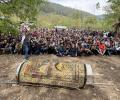
Syed Adil Hussain Shah, a 30-year-old pony ride operator, was killed while trying to protect tourists from terrorists in Pahalgam, Kashmir. He was shot dead while trying to snatch a weapon from one of the terrorists. The attack claimed the lives of 26 people, mostly tourists. Chief Minister Omar Abdullah visited Pahalgam to offer condolences to the families of the victims and praised Shah's bravery. Shah was laid to rest in his ancestral village with hundreds of mourners attending.
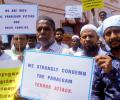
Pakistan Prime Minister Shehbaz Sharif has called on "brotherly" countries, including Saudi Arabia, to urge India to de-escalate tensions after the Pahalgam terror attack that killed 26 people. Sharif met with ambassadors from Saudi Arabia, the UAE, and Kuwait, reiterating Pakistan's commitment to peace in South Asia. He rejected India's accusations linking Pakistan to the attack, emphasizing Pakistan's own history as a victim of terrorism. The meeting comes amidst heightened tensions between the two countries.
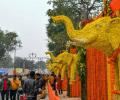
"The holy water of the Sharda Kund at the Sharda Peeth PoK was collected by Tanveer Ahmed and his team. Our civil society member across the LoC (Line of Control) carried it to Islamabad, wherefrom it was sent to his daughter Maghribi in the UK.

The story of two Adils, one a Lashkar-e-Taiba terrorist and the other a pony 'wallah' who died protecting tourists, highlights the contrasting realities of life in Kashmir. While the terrorist, Aadil Thokar, is accused of the deadly attack on tourists in Baisaran, the heroic pony 'wallah', Syed Adil Hussain Shah, sacrificed his life to save them. Their stories, though separated by a tragic event, reveal the deep-rooted conflict and the enduring spirit of compassion in Kashmir.

The Nagpur violence may have been prevented had the police considered the dangerous potential of the VHP/Bajrang Dal's demonstration; had they immediately stopped the burning of the chaddar and arrested the demonstrators; and had they fanned out to counter the rumours that spread among Muslims, observes Jyoti Punwani.
The Centre on Thursday assured the Supreme Court that it will neither denotify Waqf properties, including "Waqf by user", nor make any appointments to the central Waqf council and boards till May 5.

The daughter of a businessman from Pune, who was killed in the recent terror attack in Pahalgam, Jammu and Kashmir, has alleged that the terrorists specifically targeted male tourists after asking them to identify their religion. Asavari Jagdale, whose father Santosh Jagdale was killed in the attack, said the terrorists fired at her father and uncle after they failed to recite an Islamic verse. She also alleged that the terrorists blamed her family for supporting Prime Minister Narendra Modi.

As part of the programme, 14 states have been identified in the first phase in which there are 64 districts.
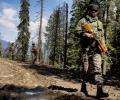
Survivors of a terrorist attack in Jammu and Kashmir's Baisaran recount a horrific massacre in which 26 tourists were killed. The attackers, clad in brown clothes and wearing GoPro cameras, demanded to know who was Hindu or Muslim before firing indiscriminately. Families of the victims demand accountability and justice, calling for increased security at tourist spots.

The Pahalgam massacre highlights the evolution of terrorism into a multi-domain challenge. India's response must similarly evolve -- from tactical retaliation to comprehensive strategic deterrence. To establish a credible and sustained deterrent, India must also carry out continuous kinetic operations, both overt and covert, suggest Sakshit Raina and Rahul Mishra. To establish a credible and sustained deterrent, India must also carry out continuous kinetic operations, both overt and covert, suggest Sakshit Raina & Rahul Mishra.

The Congress on Wednesday expelled former Madhya Pradesh MLA Laxman Singh, who is brother of ex-chief minister Digvijaya Singh, from the primary membership of the party for six years for 'anti-party activities'.

India is at war with terrorists and will bring justice to victims of the Pahalgam attack by holding the perpetrators accountable, Indian Ambassador to the US Vinay Kwatra has said. He underscored that India launched 'Operation Sindoor' on May 7, striking terror factories at nine locations in Pakistan and Pakistan-occupied Kashmir in retaliation for the Pahalgam terror attack that killed 26 civilians. Kwatra also criticized Pakistan for its continued support of terrorism and said that the world should be concerned about this.

China and Pakistan are in a tight strategic alliance. India must deal with them one at a time, but be prepared in case they decide to collude, points out Shekhar Gupta.

He said the then prime minister Manmohan Singh had given a speech in which he had said Muslims have the first right to the country's resources.

Congress leader Rahul Gandhi visited Poonch in Jammu and Kashmir, offering condolences to families affected by cross-border shelling and encouraging students who lost two classmates to the violence. During an hour-long visit, Gandhi met with students at the convent school that lost the twins, and visited families whose homes were damaged in the shelling.

Reciting Islamic verse 'Kalma' saved the life of Assam University Professor Debasish Bhattacharya by a whisker from the terrorists' bullets in Jammu and Kashmir's Pahalgam where he was holidaying with his family.
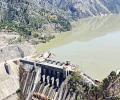
Pakistan has halted the construction of contentious canals in Punjab province after India suspended the Indus Waters Treaty following a deadly terrorist attack in Kashmir. The decision to suspend the canals project was made after Prime Minister Shehbaz Sharif met with PPP chairman Bilawal Bhutto-Zardari and agreed to address the concerns of Sindh province, where the project had sparked protests. The canals project, aimed at irrigating the desert region in Punjab, was seen as a threat to water resources in Sindh. Both sides have agreed to seek consensus on the issue in the Council of Common Interests (CCI), a high-powered inter-provincial body. Meanwhile, Pakistan has reiterated the importance of the Indus Water Treaty for its water security and economy, and condemned India's move to suspend it.
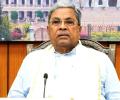
Karnataka Chief Minister Siddaramaiah has clarified his remarks on the Pahalgam terror attack, saying he did not call for no war with Pakistan, but emphasized that war should only be a last resort. His comments, which were played up by Pakistan media, have sparked criticism from the BJP, which accused him of acting like a "puppet" of an enemy nation.

A day after he was shot dead by terrorists, Kashmiri Pandit bank guard Sanjay Sharma was cremated in his native village in Jammu and Kashmir's Pulwama district on Monday, with his Muslim neighbours lending a helping hand to his grief-stricken family.
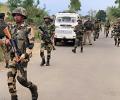
Three civilians were killed in a remote area of Jammu and Kashmir's Kathua district, sparking protests and a shutdown. The killings, which are being investigated as a possible case of terrorism, have caused fear and anger in the community. Union Home Secretary Govind Mohan is reviewing the security situation and has assured that such incidents will not be allowed to happen again. The incident has also raised concerns about the safety of local politicians, with one MLA being attacked by a group of protesters.

Sharada Kukreja, a Pakistani woman living in Odisha for 35 years after marrying an Indian citizen, has been served a notice to leave the country. She has appealed to Prime Minister Narendra Modi and Odisha CM Mohan Charan Majhi to stop her deportation, citing her long-standing ties to India and family here. Sharada fled Pakistan to escape forced conversion and marriage, and despite having an Aadhaar card and participating in elections, she has not been granted Indian citizenship. The Odisha government has identified 12 Pakistani nationals residing in the state and asked them to leave by April 27. Another Pakistani woman in Bhubaneswar also received a country exit permit on Saturday.

'We need to raise the costs and consequences for Pakistan. It is long overdue. Our initial surgical strike was effective for about six months. Then, the Balakot strike provided a deterrent for perhaps two to three years. But we cannot operate under the assumption that such limited responses will suffice for decades to come.'
'Unlike the surgical strikes and the Balakot air strikes across the LoC, we have gone further inside Pakistan and raised the bar of escalation.'

The reality is that far from being friendless, India is better positioned in the world than at any point post-Cold War, asserts Shekhar Gupta.
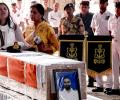
'Let his soul rest in peace...We should all be proud of him in every way. And we will make him proud in every way'

'...or go to jail.' 'The government is getting them silenced.'

The tribunal was constituted on March 18 for the purpose of adjudicating whether or not there was sufficient cause for declaring the MCJK-Bhat an unlawful association.

'The wave of terrorism is over in Kashmir. Local people do not support it.'

The political and ideological differences between the Congress and Shashi Tharoor is no longer a matter of whispers.
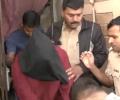
Javed Munshi, suspected to be a member of the outlawed 'Tehreek e Mujahideen' outfit in Kashmir Valley, was picked up from near Canning Hospital by a joint team of Jammu and Kashmir Police and West Bengal Police's Special Task Force, the officer said.
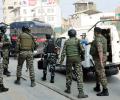
Union Home Minister Amit Shah asserted that the abrogation of Article 370 in 2019 was crucial in ending terrorism in Kashmir. He stated that the provision fostered separatism among Kashmiri youth and impeded the region's full integration into India. Shah also highlighted the development initiatives undertaken in Jammu and Kashmir post-Article 370, including a reduction in terrorism, successful local body elections, and an increase in tourism and film production. He emphasized the significance of writing India's history with facts and evidence, countering narratives that had obscured the country's rich heritage.

"This fight is against the hatred that the BJP and RSS are spreading throughout the country. They have tried to create conflicts between Hindus and Muslims, Hindus and Sikhs, and Hindus and Christians just to hold onto power. But they are failing and their strategy is not working," he said.

Dr Ruvaida Salam who hails from the border district of Kupwara, currently works as a manager at the Department of Industries and Commerce in Jammu & Kashmir.

On Thursday, July 27, amid tight security, the Shia Muslim community in Srinagar took out the 8th Day Muharram procession. The procession was carried out after a gap of 33 years in the Kashmir Valley.
'It is high time that the 'war on terror' is removed from our diplomatic toolbox.' 'Certainly, our parliamentarians have no role in it,' asserts Ambassador M K Bhadrakumar.
